
Adam Nelson
Adam lives on the Isle of Anglesey and is currently studying a BA (Hons) in Fine Art at Bangor University, North Wales.
Structure, Memory & Place
Adam's creative practice explores the ways in which environments retain traces of presence and how they shape our understanding of a place.
He is particularly interested in liminality, memory and structure - the spaces between states, the fragments of places we carry with us, and the forms through which we attempt to make sense of our surroundings.
His contemporary work investigates how landscapes are experienced, remembered and continually reinterpreted.
Adam bridges traditional and digital techniques through large abstract paintings and sculptural work. He paints lines and shapes that emerge from an instinctive visual vocabulary drawn from the natural world. He distils these familiar elements, fragmenting and reassembling them to create forms that occupy a space between recognition and abstraction. Through these processes the landscape becomes less a representation of place and more a language of memory, perception and sensation.
The resulting forms remain deliberately open-ended. He invites the viewer to move between what feels familiar and what remains uncertain.

Art & Environment
Alongside their abstract visual practice, Adam develops environmental rooted projects that explore connections with the natural world.
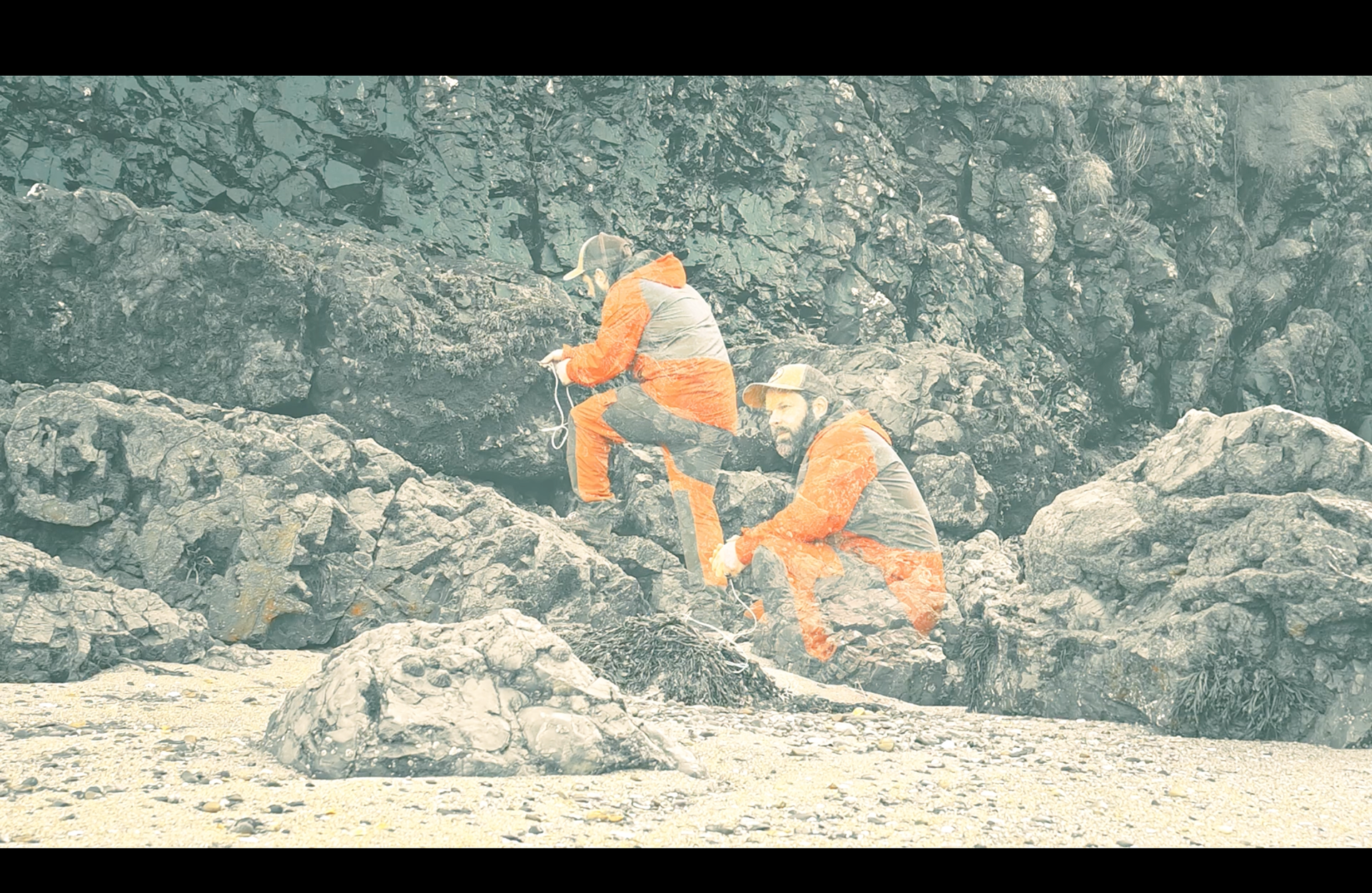
He collects field data from plants, water, rocks, coastal seaweed and trees using biofeedback technology, hydrophones and field gathering devices. Nature's responses are translated into unique soundscapes as a another way of experiencing and interpreting the environments around us.
The process allows the landscape to become more than a subject but an active participant. He considers nature as a collaborator of his work.
Through these creative projects, rhythms and exchanges emerge and are shared between living systems, place and human experience.
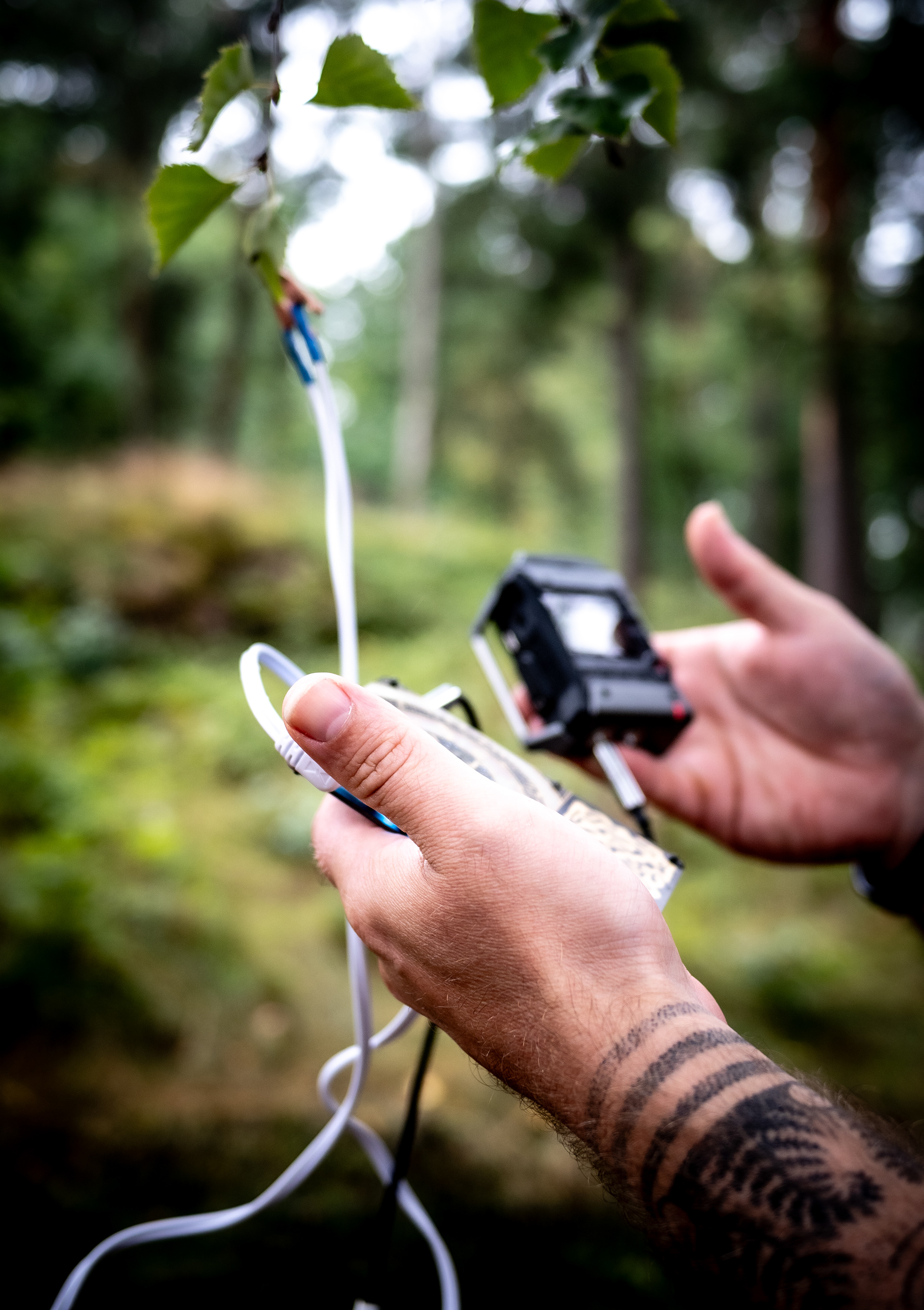
'Perhaps the most important development for me has been discovering how I can use sounds from nature to produce a physical visual response, rather than simply recording or presenting those sounds as audio.
'The idea that a plant, for example can produce electrical activity and that those subtle rhythms can be translated into something visual is fascinating to me. '
'It creates a relationship between the natural world, technology and the artwork. That means my abstract images become visual records of something that has happened. They are moments where the electrical or sonic characteristics of the natural world have been translated into new visual forms.'
- Adam Nelson